Chemteq will be doing some updates to our facility starting August 7th until August 29th. This will result in longer lead times of up to 16 business days of order processing. Thank you for your patience.
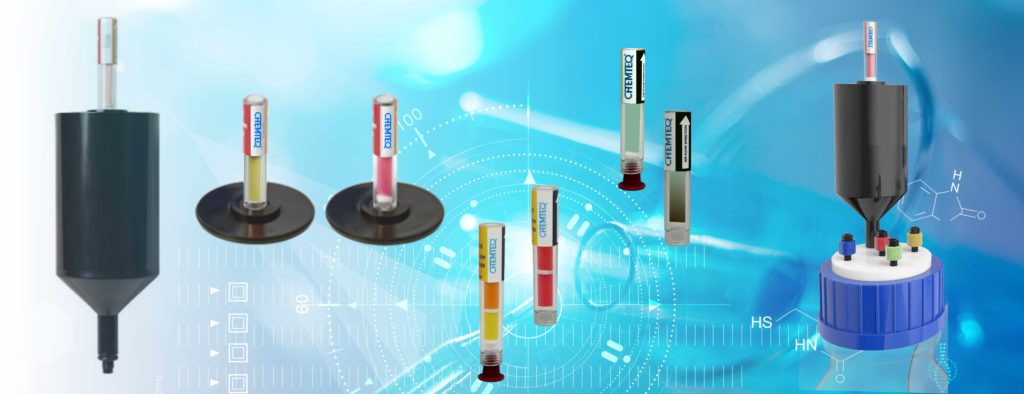
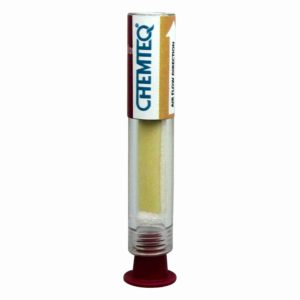
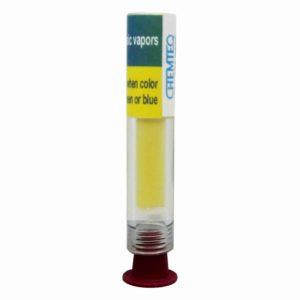
BTI-LFF V Breakthrough Indicators for Low-Flow Filters
When filter consumed, toxic gases and vapors breakthrough it. The contaminated air then enters the BTI LFF and chemically reacts with the indicating sensor. Producing vivid color change, alerting the user to change the filter. The sorption media on top of the BTI LFF traps traces of contaminants from escaping to the outside environment. It also protects the colorimetric indicator from changing color due to exposure to contaminants in the surrounding environment. This ensures that BTI LFF changes color only when filter is exhausted irrespective of the outside environment.
BTI-LFF V Breakthrough Indicators for Low-Flow Filters.
Length: 2”. Custom lengths available
Diameter: 3/8”. Custom diameters available
Threading: M10 x 1mm
Operating temperatures range: 20 – 4oC to 50 – 65oC (-4 – 39oF to 122 -149oF).
Operating humidity: 5% RH to 85%RH
Inlet: 3/8” no thread or M10 x 1mm. Custom threading available
Shelf life: 1 to 2 years
Service life: 1 to 2 years
Allowable fluid: Gases and vapors
 English
  Spanish
  German